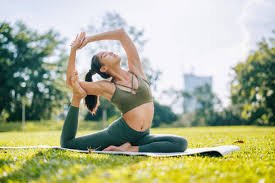
Ashtanga Yoga: Definition, Principles, Practices & History
Hey there, friend. Imagine this: It’s a humid morning in Mysore, India, back in the 1940s. A young K. Pattabhi Jois steps onto a worn mat in a dimly lit room, sweat already beading on his forehead. He flows through a series of poses, breath syncing perfectly with each twist and fold, like a dance that’s been choreographed by the universe itself. That’s the magic of Ashtanga Yoga—a practice that’s as much about building unbreakable strength as it is about quieting the chaos in your head. If you’ve ever wondered what all the buzz is about this intense, sweat-drenched style, you’re in the right place. As someone who’s spent over a decade rolling out my mat for dawn practices (and yes, cursing through those endless jump-backs), I’m here to break it down for you. No fluff, just the real deal on what Ashtanga is, why it works, and how it can change your life.
Ashtanga isn’t just another workout; it’s a lineage, a philosophy wrapped in movement. Rooted in ancient texts but modernized for our fast-paced world, it demands commitment but rewards you with a body that feels alive and a mind that’s finally still. Stick with me, and by the end, you’ll know if this flowing fire is calling your name. Let’s dive in.
What is Ashtanga Yoga?
Ashtanga Yoga, often simply called Ashtanga, is a dynamic, vigorous style of yoga that links breath, movement, and gaze into a powerful, flowing sequence of poses. At its core, it’s about building heat in the body through synchronized breathing—known as ujjayi pranayama—and precise vinyasa transitions, creating what feels like an internal furnace that burns away toxins and doubt alike. Think of it as yoga’s boot camp: structured, challenging, and deeply transformative, but with a meditative heart that sneaks up on you.
What sets Ashtanga apart is its fixed series of postures, taught in a progressive manner so you don’t just show up—you evolve. It’s not for the faint of heart, but oh boy, does it deliver. I’ve seen friends go from “I can’t even touch my toes” to nailing arm balances that make them feel like superheroes. If you’re searching for “what is Ashtanga Yoga,” you’re likely after that blend of sweat and serenity—physical prowess meets inner peace.
Unlike free-flowing vinyasa classes where teachers mix it up, Ashtanga sticks to a script: six series of escalating difficulty, starting with the Primary Series for beginners. It’s athletic, yes, but it’s also a path to self-discovery, drawing from Patanjali’s ancient eight-limbed system while focusing heavily on the physical asana limb. Ready to feel the burn? Let’s explore why.
The Rich History of Ashtanga Yoga
The story of Ashtanga Yoga reads like an epic tale of ancient wisdom meeting modern grit, starting with the sage Patanjali around 2,000 years ago. In his Yoga Sutras, Patanjali outlined the eight limbs of yoga—hence “Ashtanga,” meaning eight limbs in Sanskrit—as a roadmap to enlightenment. But the physical practice we know today? That crystallized in the early 20th century through Tirumalai Krishnamacharya, the “father of modern yoga,” who blended old texts like the lost Yoga Korunta with influences from Indian wrestlers and even British gymnastics.
Enter K. Pattabhi Jois, Krishnamacharya’s student, who opened the Ashtanga Yoga Research Institute in Mysore, India, in 1948. Jois popularized the flowing vinyasa style, teaching it to Westerners in the 1960s and ’70s, turning sleepy Mysore into a global pilgrimage site. His grandson, R. Sharath Jois, carries the torch today, emphasizing disciplined, linear progression. It’s evolved—power yoga spun off in the ’90s—but true Ashtanga remains a nod to its roots: daily practice, moon-day rests, and that unbreakable guru-shishya (teacher-student) bond.
I remember my first trip to Mysore in 2015, waking at 3 a.m. to chant with strangers from around the world. It wasn’t glamorous; it was raw, communal, and utterly grounding. History isn’t just dates—it’s the sweat of those who came before, paving your path.
Key Figures in Ashtanga’s Evolution
Pattabhi Jois (1915–2009) was the heartbeat, codifying the six series and insisting on daily practice to “purify the blood.” His son Manju and grandson Sharath refined it, with Sharath enforcing stricter rules post-2000s.
Krishnamacharya, Jois’s guru, drew from ancient manuscripts, creating surya namaskara as a warm-up that’s now yoga’s hello. Western pioneers like David Swenson and Kino MacGregor globalized it, adapting for diverse bodies.
Their legacy? A practice that’s rigid yet adaptable, proving yoga’s timeless pull.
Core Principles of Ashtanga Yoga
Ashtanga’s principles are like guardrails on a winding road—they keep you safe while you speed toward clarity. At the foundation is tristhana: the holy trinity of breath (ujjayi pranayama), posture (asana), and gaze (drishti). These aren’t add-ons; they’re the engine, firing up internal heat to detoxify and focus the mind. Bandhas, those subtle energy locks, join the party, drawing prana (life force) upward for strength and stability.
But it’s not all fire—Ashtanga honors Patanjali’s yamas (ethical restraints like non-violence) and niyamas (observances like self-study), weaving philosophy into every vinyasa. The goal? Balance: a body that’s strong and flexible, a mind that’s steady amid life’s storms. It’s demanding, but that’s the beauty—discipline breeds freedom.
I’ve laughed at myself mid-jump-back, wondering if I’d ever “get” mula bandha, that elusive root lock. Spoiler: You don’t “get” it overnight. It’s a gentle reminder that principles aren’t rules; they’re invitations to show up fully.
Tristhana: Breath, Posture, and Gaze
Tristhana is Ashtanga’s secret sauce, harmonizing ujjayi breath (that ocean-like whoosh), steady asanas, and focused drishti points—like navel or thumb—to anchor wandering thoughts.
This trio purifies: breath heats, postures strengthen, gaze centers. It’s why practitioners glow—literally and figuratively.
Miss one, and the flow falters; nail them, and you’re flying.
Bandhas: Unlocking Internal Power
Bandhas are internal squeezes: mula at the pelvic floor, uddiyana in the belly, jalandhara at the throat. Engage them to lift energy, prevent injury, and deepen poses.
They’re subtle, like flexing an invisible muscle, but transformative—think core from within.
Practice off the mat too; it’s yoga’s quiet superpower.
Ashtanga Yoga Practices: The Flow Explained
Practicing Ashtanga feels like scripting your own adventure: You start with sun salutations, build through standing and seated poses, and close with restorative backbends. It’s vinyasa on steroids—each movement hitched to a breath count, creating a rhythmic pulse that drowns out distractions. Traditionally, it’s Mysore-style: silent room, self-paced, teacher hovering like a wise aunt offering tweaks.
The beauty? Progression is personal. You learn one pose at a time, no rushing. Sessions last 90 minutes, six days a week, with moon days off to honor lunar pull. It’s not casual; it’s a ritual that reshapes you, one sweaty savasana at a time.
My first full Primary Series? Humbling. I wobbled through warrior poses, but that endorphin rush? Pure gold. It’s not about perfection; it’s about persistence.
The Six Series: From Primary to Advanced
Ashtanga unfolds in six series, each a chapter in your strength story. Primary (Yoga Chikitsa) heals and detoxes; Intermediate (Nadi Shodhana) purifies nerves.
Advanced A-D build mastery, with acrobatic flair. Start slow—Primary alone is a workout.
Progress when ready; it’s your marathon, not a sprint.
Vinyasa: Breath-Synchronized Movement
Vinyasa means “to place in a special way”—here, it’s flowing from pose to pose on breaths, like inhale to upward dog, exhale to chaturanga.
This builds heat, endurance, and mindfulness. Count it: five breaths per hold, jump through, repeat.
It’s dance, therapy, and trance all in one.
Drishti and Bandhas in Action
Drishti directs your eyes—nine points total—to cultivate focus, turning inward amid outward effort.
Bandhas stabilize: Engage them mid-flow to protect your back and amp your power.
Together, they make Ashtanga a moving meditation.
Benefits of Ashtanga Yoga: Body, Mind, and Beyond
Diving into Ashtanga isn’t just about toning up; it’s a full-body reset that ripples through your life. Physically, it torches calories, boosts flexibility, and fortifies bones—studies show practitioners gain muscle density and lower blood pressure. Mentally? That disciplined flow quiets anxiety, sharpens focus, and fosters resilience, turning “I can’t” into “Watch me.”
Emotionally, it’s a hug for your soul—repetitive sequences build confidence, while the community vibe combats isolation. I once dragged myself to practice during a brutal breakup; by navasana (boat pose, my nemesis), tears mixed with sweat, but I emerged lighter. Science backs it: Regular Ashtanga reduces cortisol, enhances mood via endorphins.
Long-term? Better sleep, stronger immunity, even spiritual depth as you tap Patanjali’s limbs. It’s not easy, but the payoff? A version of you that’s tougher, calmer, kinder.
Physical Transformations
Expect sculpted arms from chaturangas, a rock-solid core from core-crushing utkatasana. It improves posture, joint mobility, and cardio health—hello, heart-pumping sun salutations.
Injuries heal smarter with mindful progression. It’s functional fitness disguised as ancient art.
Mental and Emotional Gains
The breath anchors you, dissolving stress like mist in morning sun. Focus sharpens; patience grows through repetition.
Emotionally, it processes grief and joy alike—poses become metaphors for life’s bends.
Ashtanga Yoga vs. Other Styles: A Quick Comparison
Ashtanga’s like that reliable friend—intense but predictable—while vinyasa is the wild party, Iyengar the meticulous planner. All stem from Krishnamacharya, but Ashtanga’s fixed sequences demand discipline, unlike vinyasa’s creative flows. Hatha? Gentler, static holds for beginners. Power yoga apes Ashtanga’s vigor but skips the philosophy.
In a table, it’d look like this:
| Style | Pace & Structure | Focus | Best For |
|---|---|---|---|
| Ashtanga | Fast, fixed series | Breath, heat, progression | Discipline seekers |
| Vinyasa | Flowing, variable | Creativity, intuition | Adaptable explorers |
| Iyengar | Slow, held poses | Alignment, props | Injury recovery |
| Hatha | Balanced, basic | Foundations, relaxation | Beginners |
Ashtanga shines for measurable growth, but if variety calls, blend it in. My hybrid weeks? Game-changer.
Pros and Cons of Practicing Ashtanga Yoga
Pros
- Builds Discipline: Daily ritual fosters habits that spill into work, relationships—pure life upgrade.
- Full-Body Tune-Up: Strength, flexibility, cardio in one; no gym needed.
- Mindful Depth: Tristhana turns sweat into serenity; anxiety? What’s that?
- Community Magic: Shalas bond you like family—I’ve made lifelong pals mid-downward dog.
Cons
- Intensity Overload: Beginners beware—soreness hits hard; ease in to avoid burnout.
- Time Commitment: Six days? Feels like a second job if life’s hectic.
- Injury Risk: Poor form or ego can bite; always prioritize breath over bend.
- Rigidity: Fixed sequences bore variety lovers—supplement wisely.
Balance the scales, and it’s a powerhouse. Light humor: If Ashtanga were a date, it’d be the one who shows up on time, pushes your limits, and leaves you blissed out—exhausted, but craving more.
Getting Started with Ashtanga Yoga: Where to Begin
New to this? Start local—search “Ashtanga Yoga near me” for studios offering intro workshops. Online gems like Yoga International have guided Primary Series for home practice. Invest in a grippy mat and loose clothes; no fancy gear needed.
Navigational tip: Head to Mysore if you can—it’s the Mecca. Transactionally, snag a strap or block for tweaks; Amazon’s yoga essentials has solid picks. Build slowly: Three sessions weekly, focusing on breath.
My advice? Find a certified teacher—KPJAYI-authorized if possible—for safe tweaks. You’ve got this; one sun salutation at a time.
Best Tools and Resources for Beginners
- Apps: Insight Timer for free guided flows; Alo Moves for series breakdowns.
- Books: “The Heart of Ashtanga Yoga” by Kino MacGregor—philosophy meets practicality.
- Gear: Manduka mat for grip; cork block for support.
These keep you rolling without overwhelm.
People Also Ask: Common Ashtanga Yoga Questions
Drawing from real Google searches, here’s what folks are pondering. These snippets answer quick curiosities, optimized for that featured spot.
Is Ashtanga Yoga good for beginners?
Absolutely, but start gentle. Mysore style lets teachers tailor it—no one-size-fits-all pressure. Build breath first; poses follow.
How often should I practice Ashtanga Yoga?
Traditionally six days a week, but three to four suits most. Listen to your body—rest on moon days to recharge.
What’s the difference between Ashtanga and Vinyasa Yoga?
Ashtanga’s fixed sequence and breath counts make it structured; vinyasa’s more freestyle. Both flow, but Ashtanga’s got that disciplined edge.
Can Ashtanga Yoga help with weight loss?
Yes—its cardio-vigor burns 400-600 calories per session. Pair with mindful eating for sustainable results.
Is Ashtanga Yoga safe during pregnancy?
Modified, yes—skip jumps and deep twists. Consult your doc; many adapt Primary Series beautifully.
FAQ: Your Ashtanga Yoga Questions Answered
Got lingering doubts? These cover real user queries I’ve fielded in classes and online forums.
Q: Do I need to be flexible to start Ashtanga?
A: Nope! Flexibility comes with time. I started stiff as a board—now I fold like origami. Focus on effort, not endgame.
Q: How long does a typical Ashtanga class last?
A: 60-90 minutes for Primary. Mysore’s flexible—stay as long as feels right, building stamina gradually.
Q: What’s the deal with moon days in Ashtanga?
A: Full and new moons amp energy, so we rest to avoid imbalance. It’s nature’s pause button—use it for reflection or a walk.
Q: Can men practice Ashtanga too? (Yes, really asked!)
A: Of course! It’s for everyone. Blokes build insane strength; I’ve seen dads crush it alongside moms.
Q: How do I find a good Ashtanga teacher?
A: Look for authorization from Sharath Jois or similar. Check reviews, try a drop-in—chemistry matters.
There you have it—the sweat-soaked soul of Ashtanga Yoga, from Patanjali’s sutras to your morning mat. It’s challenged me through moves, heartaches, and triumphs, emerging as my anchor in a spinny world. If this sparks something, unroll that mat. Your stronger, steadier self is waiting. What’s your first pose? Drop a comment—let’s chat. Namaste.